.png)
Commercial Roof Maintenance: A Practical Guide for Building Owners
September 22, 2026
•
Written By
Ladder Lions Roofing
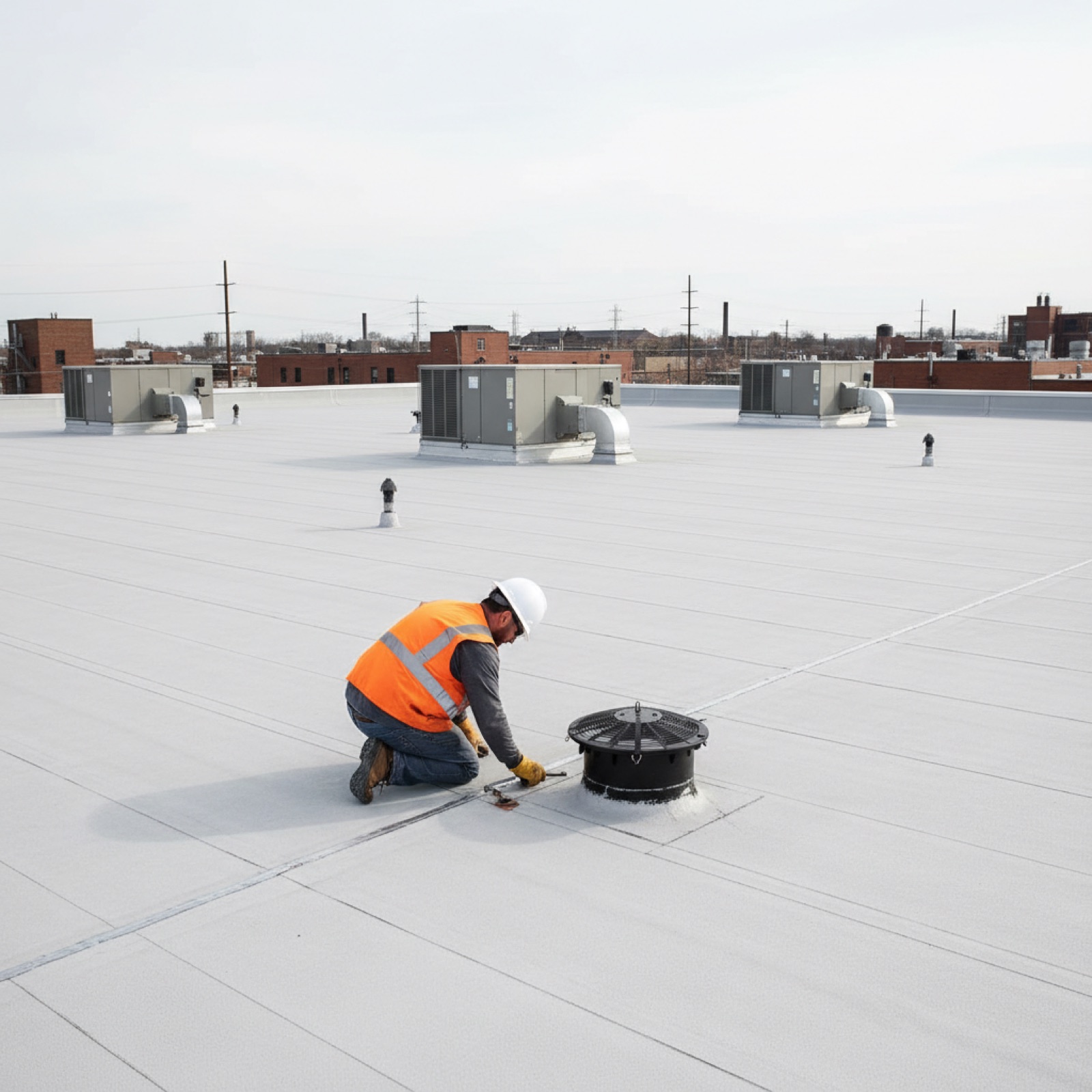
A commercial roof is one of the largest and most expensive parts of your building, yet it is easy to ignore until water shows up inside. A steady maintenance routine is the least expensive way to protect that investment. It catches small problems while they are still small, extends the life of the roof, and helps you avoid the surprise of an emergency repair during business hours.
This guide walks building owners and property managers through what commercial roof maintenance involves, what a professional inspection covers, and how to keep a flat or low-slope roof performing for its full expected life.
Key Takeaways
- Inspect a commercial roof at least twice a year, in spring and fall, and again after any major storm.
- Most leaks start at details like drains, flashing, seams, and rooftop penetrations, not in the middle of the field.
- Keeping records of inspections and repairs is often required to keep a manufacturer warranty valid.
- Planned maintenance costs far less than reactive repairs and premature replacement.
Why Commercial Roof Maintenance Matters
Flat and low-slope commercial roofs do not shed water as quickly as a steep residential roof. Water sits longer, finds weak points, and works into seams and penetrations. Over time, sun, temperature swings, foot traffic, and our freeze and thaw winters all wear on the membrane and its details.
When a small issue goes unnoticed, the damage rarely stays on the roof. Water can reach insulation, decking, ceilings, inventory, and equipment, turning a minor repair into a major one. A maintenance program is simply the most cost-effective way to protect the building and avoid downtime.
A Seasonal Commercial Roof Maintenance Checklist
The most reliable approach is a scheduled routine rather than waiting for a problem. Here is a practical seasonal rhythm.
Spring
- Clear winter debris from the roof surface, drains, and gutters.
- Check for damage from ice, snow load, and freeze and thaw movement.
- Inspect seams, flashing, and penetrations that expand and contract with temperature.
- Confirm drains and scuppers flow freely before spring rains.
Fall
- Remove leaves and debris so drains do not clog heading into winter.
- Inspect the membrane for punctures, blisters, or open seams.
- Check rooftop equipment curbs and flashing for gaps.
- Address any minor repairs before the first freeze.
After Every Major Storm
- Look for wind-lifted membrane, displaced flashing, and new debris.
- Check for punctures from blown debris or hail.
- Document any damage with photos in case an insurance claim is needed.
What a Professional Roof Inspection Covers
A trained commercial roofer looks well beyond the obvious. A thorough inspection includes:
- The membrane field: punctures, blisters, splits, and general wear.
- Seams: the welded or bonded joints where many leaks begin.
- Flashing: the metal and membrane details at walls, curbs, and edges.
- Penetrations: pipes, vents, HVAC curbs, and anything that passes through the roof.
- Drains and scuppers: clogs, standing water, and slow drainage.
- Rooftop equipment: loose fasteners, leaking units, and damage from service traffic.
After the inspection, you should receive a clear report with photos and a recommended list of repairs by priority, so you can plan the work and the budget.
Common Problem Areas on Commercial Roofs
Most commercial roof leaks trace back to a handful of details rather than the open field of the roof.
Drains and Ponding Water
When drains clog or the roof does not slope properly, water pools. Ponding water adds weight, speeds up membrane wear, and finds seams. Keeping drains clear is one of the simplest and most valuable maintenance tasks.
Flashing and Penetrations
The transitions where the roof meets walls, curbs, and pipes are where movement and sealant failure show up first. These details need regular attention because they take the most stress.
Seams and Membrane Damage
Open seams, punctures from dropped tools or foot traffic, and blisters let water under the membrane. Catching these early keeps them from spreading. For a closer look at these trouble spots, see our article on the common problem areas of commercial flat roofs.
Maintenance by Membrane Type
Different commercial roofing systems age in different ways, and maintenance should reflect that.
- TPO and PVC: single-ply membranes with welded seams. Watch the welds, the flashing details, and any punctures.
- EPDM: a rubber membrane where seams and adhesives deserve close attention over time.
- Modified bitumen and built-up roofs: check for surface wear, open laps, and blistering.
- Metal: inspect fasteners, panel seams, and sealant at penetrations, and watch for corrosion.
Ladder Lions Roofing works on all of these systems. Learn more about our flat roofing and commercial roof repair services.
Documentation and Warranty Compliance
Many manufacturer warranties on commercial roofs require proof of regular maintenance. If a claim comes up and you cannot show that the roof was inspected and maintained, the warranty may not cover the repair. Keeping simple records of each inspection, along with photos and any repairs, protects both the roof and your coverage. A professional maintenance program keeps that paperwork organized for you.
Should You Handle Maintenance In-House or Hire a Roofer?
Your maintenance staff can handle basic housekeeping like clearing debris and keeping drains open, and that work has real value. Inspecting seams, flashing, and membrane condition, and making repairs, is best left to a commercial roofer who knows what early failure looks like and can fix it correctly without voiding a warranty. A good approach combines routine housekeeping by your team with scheduled professional inspections. If you are still choosing a contractor, our guide on finding the right commercial roof contractor can help.
Frequently Asked Questions
How often should a commercial roof be inspected?
At least twice a year, in spring and fall, plus an extra inspection after any major storm. This schedule catches seasonal wear and storm damage before it turns into a leak.
What is the most common cause of commercial roof leaks?
Most leaks start at details rather than the open field of the roof. Clogged drains, failed flashing, open seams, and penetrations around pipes and rooftop units are the usual culprits.
Does regular maintenance really extend the life of a commercial roof?
Yes. Addressing small issues early prevents water from reaching insulation and decking, which is what shortens a roof's life. A maintained roof commonly reaches or exceeds its expected service life, while a neglected one often fails early.
Can roof maintenance affect my warranty?
It can. Many manufacturer warranties require documented maintenance, and skipping it can jeopardize a future claim. Keeping records of inspections and repairs helps protect your coverage.
What does ponding water do to a flat roof?
Ponding water adds weight, accelerates membrane breakdown, and works into seams over time. Keeping drains clear and correcting drainage problems is one of the most important maintenance steps.
Protect Your Building With a Maintenance Plan
A commercial roof rewards attention. Regular inspections, clear drains, and prompt small repairs add years of service and help you avoid costly surprises. Ladder Lions Roofing provides commercial roof inspections, maintenance, and repairs across Southeast Indiana. Call (812) 932-0506 or request a free estimate to set up a plan for your building.
Let Us Tame Your Roof!
Recent Articles
Commercial Roofing
Commercial Roof Maintenance: A Practical Guide for Building Owners
September 22, 2026
Residential Roofing
The Platinum Standard: Why Shingle Manufacturer Certifications Control the Life of Your Roof Warranty
September 15, 2026
Residential Roofing
GAF vs Owens Corning Shingles: An Honest Comparison
September 15, 2026
Commercial Gutters
Commercial Gutter Overload: Avoiding Building Erosion and Foundation Damage During August Storms
August 17, 2026